Greening the Skyline: How Toronto’s Rooftop Gardens Are Changing Urban Air
2025-11-05 · By Lucas Tremblay
Once overlooked spaces, rooftops across Toronto are now home to pollinator-friendly plants and urban farms that support biodiversity and cleaner air.
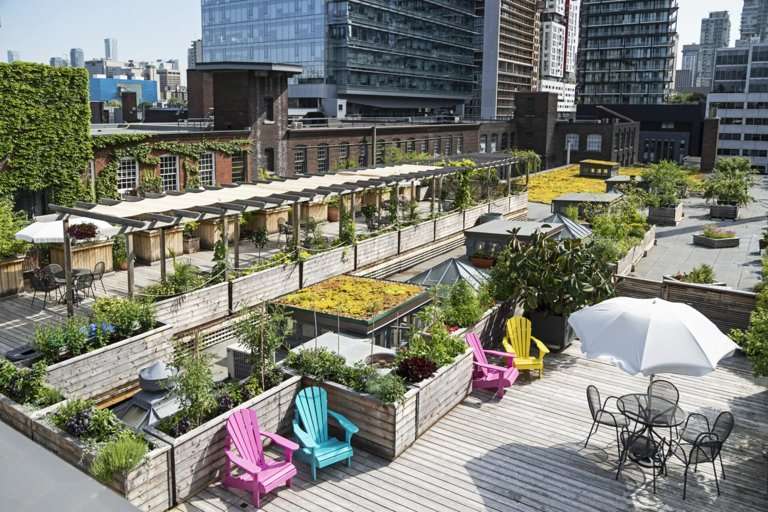
Above Toronto’s dense grid of concrete and glass, a quiet transformation is taking root. Rooftop gardens — once a novelty for luxury condos — are now sprouting across office buildings, schools, and apartment complexes. The movement is reshaping the city’s skyline while offering an unlikely solution to two urban challenges: rising temperatures and declining air quality.
Urban planners have long pointed to the “heat island effect” as one of Toronto’s most pressing environmental problems. Paved surfaces absorb and radiate heat, making downtown areas several degrees warmer than surrounding suburbs. By covering rooftops with vegetation, engineers say the city can cool itself naturally while capturing carbon and filtering pollutants from the air.
One of the city’s most successful examples is the podium roof of City Hall’s East Tower, which now hosts a pollinator-friendly garden visible from the observation deck above Nathan Phillips Square. “It’s a small forest in the sky,” says environmental designer Jacob Leclerc. “We wanted to prove that even a few hundred square metres can make a measurable impact on air temperature and biodiversity.”
The benefits go beyond cooling. Green roofs absorb stormwater runoff, reducing strain on the city’s drainage systems during heavy rainfall. For commercial developers, they also extend roof lifespan by shielding materials from UV radiation and extreme weather. “It’s smart business disguised as environmentalism,” says architect Karen Fraser, who consults on sustainable building retrofits across the GTA.
Toronto’s Green Roof Bylaw, introduced in 2009, was among the first of its kind in North America. It requires most new large buildings to dedicate a portion of their roof space to greenery. Initially met with skepticism, the regulation has since become a point of civic pride. According to city data, more than 700 green roofs now cover nearly 600,000 square metres of Toronto real estate.
For residents, rooftop gardens have become unexpected sanctuaries. From the University of Toronto’s St. George campus to community co-ops in Parkdale, these green spaces provide fresh air and moments of calm amid the urban din. “It’s the only time I can hear birds instead of traffic,” says resident gardener Noor Ahmed, who volunteers on her building’s rooftop farm.
Environmental scientists say the collective effect of these spaces may be greater than the sum of their parts. “Every garden contributes to a larger ecological network,” explains Dr. Fiona Glover from the University of Guelph. “They create habitats for bees, butterflies, and migratory birds, all of which are critical to urban ecosystems.” Researchers estimate that Toronto’s rooftops now host over 40 native plant species.
Still, maintenance remains a challenge. Green roofs require irrigation systems, nutrient-rich soil, and regular care to thrive. Costs can deter smaller landlords, but incentives such as tax rebates and environmental grants have helped expand adoption. “The investment pays itself back in reduced energy use and increased property value,” notes Fraser.
As Toronto looks to the future, rooftop gardens represent more than urban beautification — they signal resilience. Each patch of greenery helps the city breathe a little easier, both literally and metaphorically. In the quiet rustle of leaves above the skyline, a greener vision of Toronto is already taking shape.